what is atopic dermatitis?
Atopic dermatitis, also known as AD, is the most prevalent type of eczema. This condition involves chronic inflammation of the skin, often triggered by an immune system that is overly active. Atopic dermatitis, or eczema, can appear on most of the body, including the scalp, eyelids, and hands. Symptoms differ for each person, but common signs are redness, itching, dryness, and thick skin.
Atopic dermatitis isn’t “just” a skin condition. It is a systemic inflammatory disease that can have a significant physical and psychological impact. However, with appropriate care and support, the disease can be manageable.
Beneath the skin
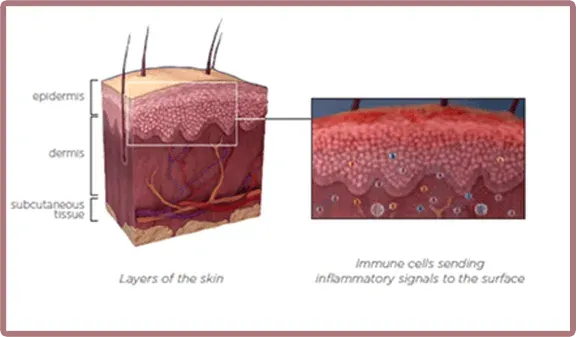
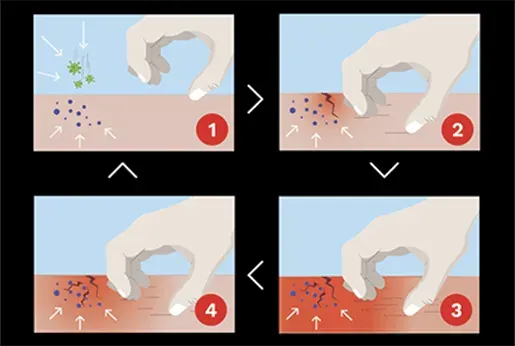
Rashes are just the visible signs of what’s going on underneath the skin. Even when skin looks clear, inflammation may still be active under the surface.① Itch
② Scratch
③ Damaged skin
④ Release of inflammatory signals
Emotional Impact of Atopic Dermatitis
Many people with moderate-to-severe eczema feel that it negatively impacts several aspects of their lives and influences important life decisions, whether it be socially, at work or at school.
Did you Know?
As a chronic inflammatory disease with no cure, eczema is one of the most common and burdensome dermatological conditions globally.
Driven in part by underlying chronic inflammation, a cause of eczema starts from within the immune system. Eczema is commonly associated with other inflammatory conditions. There are ways to manage and live with eczema.